Hello all, unfortunately John's eyesight has deteriorated and we have moved from the BOP to Otago.
We have taken all the equipment for the HDR repair business with us and we are looking for someone with a sharp mind and good engineering skills to buy the business because John can no longer repair the dampers to the standard he would like.
The business has full records, training is available in all aspects of the business and there are a lot of moulds and jigs for repairing the dampers, plus 3 presses and other items that are essential including rubber supplies, adhesives, damper stock etc. We can also hand over the phone number and email address and this blog as well as the Trademe account which the business operates.
Cost is negotiable.
The HDR business takes up only enough space to partly fill a single car garage, so it's not huge.
Outlook - the future outlook for the damper repair business is positive because as petrol cars become collectors items, parts will no longer be produced for them and thus repair of the crank pulleys will become essential for the maintenance of all these vehicles from the past 120 years of automotive history.
Recently we were contacted by Michael who has written an interesting blog about the crankshaft breakage problems in Austin Healey 100s.
Here's a selection of his blog post all of which you can find HERE
'“Cumulative Fatigue Failure for Dummies”
I broke a crankshaft while racing my 100S and that experience always haunted me because original 100S engine blocks are extremely rare and I knew that I had been very lucky not to have destroyed mine with that “blow up”.
Over the years I had encountered many cases of 100 crankshaft failures and it was the fear of another in the “S” that caused me to study the issue. The conclusions arrived at and described below prompted me to build a very special competition engine for the car which you can read about here.
WHY DO AUSTIN HEALEY 100 CRANKSHAFTS BREAK?
The Austin Healey 100 engine was actually developed from a 1929 Chevrolet design and several aspects of the design contribute to the crankshaft failure problem, these include:
The engine size which at 2660 c.c., is around the upper limit of what is optimal in an automotive 4 cylinder unit.
The relatively spindly forged steel crankshaft which has no “pin overlap” and is only supported in 3 main bearings
The extremely big and heavy flywheel necessitated by the engine design.
To understand why these 3 aspects of the design are major issues it is first important to understand some less than common engineering terms and concepts.
CRANKSHAFT ROTATIONAL SPEED OSCILLATION.... FOLLOW THE LINK TO READ MORE.
We think that an engine should be tested on a dyno machine with the AH 6 cylinder damper on it. If such a test shows that vibration in the engine is eliminated from 0-3000 RPM then the 6 cylinder damper is working.
At HDR we are working on developing rubber repairs for all these flat dinner plate style dampers.
Time changes everything.
Automobiles are in a time of great change.
Electric cars and autonomous automobiles are swiftly taking over as daily transport.
Petrol automobiles are becoming collectors items. Spare parts which are now cheap and easy to get are becoming rare and hard to come by.
We have stores of all kinds of rare and hard to find harmonic dampers and hubs and inertia rings.
We will be helping petrol powered auto owners to keep their precious collectible lovely cars on the road.
Naturally, our services to rebuild your old harmonic damper will cost more than a junky aftermarket part that won't last long and hasn't got a warranty.
We offer you a remanufactured OEM part for your old Chevrolet, Ford or Holden and it has a 5 year unlimited km warranty.
Our fee is NOT Competitive with Mexican parts, or Chinese parts.
Not Now.
But it sure as heck will keep your lovely old automobile on the road, purring like a happy cat.
And when the market for aftermarket cheap parts has meant those manufacturers have moved on to make other things and there are zero parts available from them, chances are, we will be here still refurbishing harmonic dampers, for what it costs us in time and materials to repair them.
In automotive history it's often said, if there were two cars made, then one of them will be in New Zealand somewhere.
Today we feature our first video attempt to make a record of a damper we are rebuilding: a beautiful Lincoln Continental from 1966.
And on YouTube we find an original commercial from 1966 of the latest Lincoln Continental and all the latest fab up-to-date features.
Our aim in the future on our YouTube channel is to share with you a few of the secrets, joys and heartaches of rebuilding and remanufacturing harmonic dampers and crank pulleys from the many and varied parts that cross our work bench.
Currently on the rebuild shelf we have a 1917 Studebaker harmonic damper. We aim to show you how we work on a rare and precious part like this to bring it back from the dead, to make it into a functioning part which the owner can fit with confidence to his vehicle.
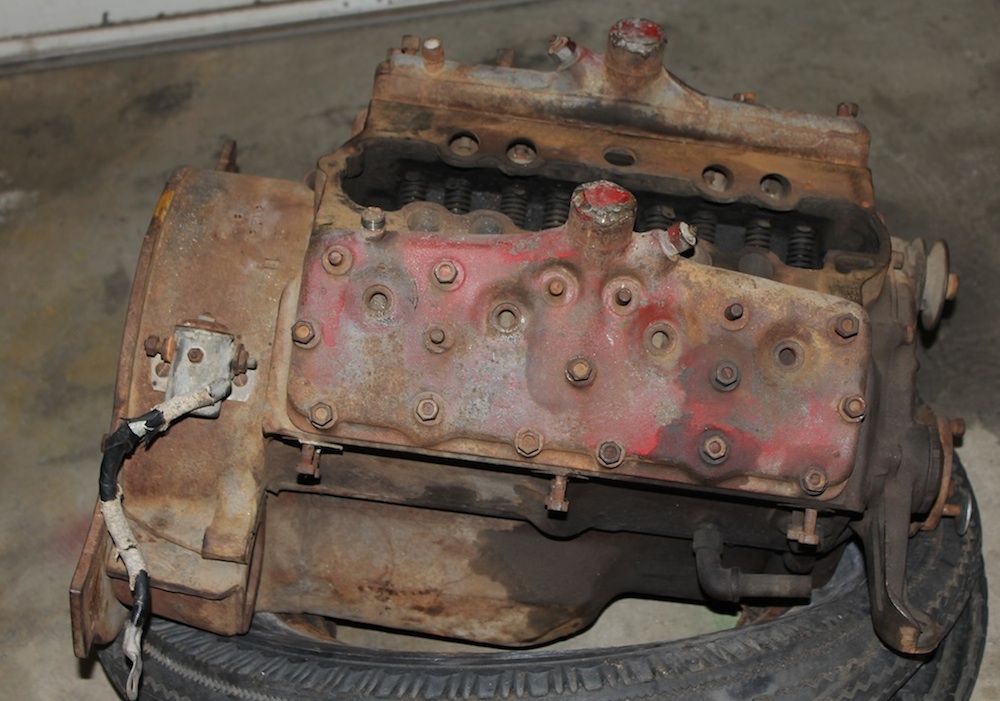
We bought a 1950s Ford V8 flathead engine assured it was ‘a good one’ so Damperdude began disassembly
to discover that this was the first time this engine had ever been taken apart:
it was a virgin. It really was a good one.
To explain: a standard flathead in used condition from
this era would be worn out completely. There would have been at least one
rebuild in the life of the engine. Many of the nuts and bolts are spoiled where
spanners and sockets have been used to force them undone. Threads of many of the
bolts will have been damaged. The piston bores would be badly worn, the pistons
on the thrust side would have the worst wear, which is why the old flatheads
burn oil.
The mystery is that our flathead has clearly never been
taken apart, ever. The whole engine is stock standard. There is thick black mud
as the remains of engine oil in the block and sump. The valves are original
Ford valves, the valve seats are un-burnt, not recessed, they are mint. The
valves had never been adjusted, but still had clearance. The crankshaft is worn
and has slight bluing because of lack of lubricant on the journals, especially
the mains. The piston bores are worn but look as if they will go to 10thou
oversize and the pistons are in quite good condition although the ring lands
are a bit sloppy. The original gaskets are present throughout the engine. The
original Ford bearing shells are in situ, the distributor is in really good
nick but the water jackets are quite corroded and the engine shows obvious
signs of never having been serviced nor used a great deal.
There are no markings on the engine to identify it, to
say what year it is, or where it came from. The Inspector’s stamps from the
Ford Factory are the only marks on it. The only clue there is as to year of
manufacture is 1BA cast into the crankshaft, this, according to the numbering
system, indicates manufacture in 1951. The mystery is why would a 50s Ford flathead
be treated like that? What was it’s history that it arrived in New Zealand as
literally an un-cracked egg.
A conversation this week has likely resolved the mystery
of the history of this beautiful old engine and why it is in such good
condition.
The sound of those things I find either terrifying or exhilarating, I can't decide which.
Now a little history. Post World War II US communities
felt they needed an emergency warning system should a Nuclear war be
declared, so Ford, Chevrolet and Chrysler factories were commissioned with
producing hundreds of thousands of air raid sirens, complete with engines to
run them. These sirens were mounted on public buildings, towers and poles throughout
the USA. According to the information I’ve found, many thousands of these
sirens remain where they were put 60+ years ago. However in many communities
they are being removed as urban development progresses.
Modern communications networks mean that, in theory anyway, danger alerts can best be conveyed by mobile phone networks.
A customer this week shared with us that his father was a
mechanic in a US city. He was charged with making sure all the warning sirens
worked during the 1950s and 60s. The sirens were fitted with Ford, Chevrolet or
Chrysler 6 cylinder, V8 or hemi engines to run the fans to create the siren
howl. The mechanic would travel around the siren sites, once or twice a year, top up the fuel tank, start
up the engine, let it run for a couple of hours, top up the oil occasionally,
then switch it off. No other maintenance was ever done to these engines. Now
the engines from dismantled sirens are entering the world market as viable
flathead engines for restoration.
We are investigating the possibility of building harmonic
dampers for these 65 year old engines as when they were made they were only
made to run at 3000 rpm or less. Modern hot rod owners can have these
engines running to as much as 7000 rpm and this means damaging harmonics are
affecting the life of the engine, wearing them out faster than they would if an
efficient harmonic damper were fitted.
We can also source custom made Ford Model A harmonic
dampers for those who need to run the engines faster than they were made to go.
Why can't you fix my broken damper, crank balancer?
There are some jobs we just cannot make a custom repair for, and there's a lot of reasons.
COST:- The design of the damper means that when it is worn out, it cannot be re-manufactured by hand without enormous cost to you, the customer. If cost is not an issue for you, we can put the time into our best effort at getting you a newly functioning damper. Because John is an aircraft fitter he can create all new parts if the damper is in such poor condition that it cannot be re-used.
DESIGN:- Like a lot of mechanical parts, automobile and truck harmonic dampers were not created to be dis-assembled and re-manufactured.
MANUFACTURE:- Manufacturing processes used to make them aren't conducive to repairing them. Parts like crank pulleys/dampers are made to a designated price; cheap and fast is the way they are made in the past 50 years. Recent dampers are made in temperature controlled robot factories using techniques humans cannot replicate.
Making parts disposable and only replaceable with new OEM parts protects manufacturers from law suits. It also guarantees that consumers must buy newer vehicles when old vehicles become obsolete.
Catch with this? Once all the old parts are sold your vehicle is off the road for lack of one small but crucial part - the crank pulley or harmonic damper.
That is where we can usually help you.
1930s Packard damper
What is it like inside?
So what are our specific difficulties?
Time.
Many of our customers need the part yesterday. This is because they checked the harmonic damper last in their maintenance schedule. We cannot make up for time our customers have lost by not sending the part to us in a timely fashion for repair.
Unforseen glitches in the repair process can take a lot of time to resolve.
At HDR we take the time to give you a great result.
Dis-assembling the part to find out how it was made without breaking it.
Often the majority of time spent on a new job will be this seemingly simple task. If the delicate cast iron of the hub or inertia ring is broken it is really hard to repair so we don't break it.
Complex dampers with flimsy light parts and large areas of rubber molded around internal metal components are almost impossible to dis-assemble without damaging the parts.
Parts are too worn out.
Some dampers are so worn out that there is no regular fix and the worn or broken parts must be repaired by hand. Cast iron welding, keyway cutting, new springs, inertia rings and hubs can all be made but at a cost of time and money for you the customer.
Unusual manufacture:
We see crank pulleys from 100 years of automotive history. From Bugatti to Packard and Rolls Royce; GM and Ford to Hyundai, Renault, Datsun and Skoda. And everything else in between.
Because each crank pulley has been designed to dampen the vibrations from one particular style of crank shaft they are all unique. Functionally they do the same job, but the reality is that for every engine there is a different damper designed by a different group of engineers to solve specific harmonic vibration issues with the engine in the development stage.
So unless we get a run of dampers to repair from the same year, make and model of engine, every job is very different and requires different skills.
It's a dual hazard and joy of working in a custom rebuilding industry.
Successful difficult rebuild: Renault 05
We can't duplicate the way it was made to re-assemble it so that it works the way it was designed to work for your engine.
Sometimes there is no alternative way to assemble it.
Over the past nine years we have developed a lot of different techniques using new rubbers, special bonding agents and the like to solve re-manufacturing issues but there is a limit to our ingenuity when it comes to re-assembling some crank pulleys.
Some components fail to:
Balance
Weigh the right weight
Have the inertia ring run concentric with the hub
Include all the components they are supposed to contain in the space they were designed to occupy.
Run the pulley belts in the correct alignment
Have the timing in the correct place;
Whatever the reasons for these issues, if they cannot be resolved it means we can't begin or complete the job.
Toyota boat special before repair
Toyota boat special after repair
If we say we can't fix it we really mean it.
It means that in our experience it will be uneconomic, or simply not possible to repair.
If you want us to go the extra mile, it's your call: feel welcome to have a discussion with us about your needs.
Making a completely new damper or a prototype damper for an engine which has never had a damper
If you can afford the time and cost for us to put the time into hand crafting a completely new damper by making a new hub, inertia ring, rubbers, springs and other parts, most worn out crank pulley/dampers can be repaired so they work or alternatively completely accurately reproduced.
This could save your special engine from death in the back of the shed.
Contact us damperdude - at - gmail.com and send some photographs of your crank pulley.
Or give us a call, we are friendly and keen to learn and share information. 00 64 7&863 3350
Check out our featured book http://quintessence.papertrell.com/id003678303/Lets-Fix-It
So your crank pulley is broke and you are shopping around for another one and the wrecker has a second hand one from the same make and model of car.
If your car is 10 years of age or older, there's a good chance that the pulley is as close to munted as the one you just took off the crank shaft.
Why?
Because RUBBER is why.
Rubber is the part that most often fails in a crank pulley, crank balancer or harmonic damper.
Rubber is an organic substance that breaks down with heat, water, oil, use and simple age.
All rubber parts of your automobile are going to die a slow sad death at some stage and require replacement.
When the rubber dies it usually does one of two things:
It cracks, shrinks, dries out and gets hard as a piece of wood.
It melts into a soft gooey jelly that is very messy to clean up.
So replacing your harmonic damper with a second-hand damper that may cost you just as much as a rebuilt damper means that it is inevitable that you will have to replace it again soon.
It also puts your precious automobile's engine at risk of catastrophic failure.
Check out our other blog posts to find out why.
We are totally happy to repair and re-rubber any second-hand or original OEM damper for you before you put it on your vehicle.
Care for your engine by buying it a re-manufactured damper/pulley or a new damper.
Below is information which I have compiled for International inquiries. I hope it helps answer your concerns. Please call us or email back if you have any other questions.
When you do send us dampers please email us the date sent, the number sent and what they are, please as parcels sent to us have been mislaid locally and we like to retrieve them but if you don't inform us they are sent, we will never know.
Please address the parcel to Harmonic Damper Rebuilds Ltd, 29 Russell St, Waihi, 3610, New Zealand
QUOTE: We cannot give you an estimate of the cost of the repair without a photograph of front back and edge of each damper. Having restored quite a lot of Classic car dampers we know they vary widely in how they are constructed and how much time it will take to disassemble, clean and remanufacture them. However when we get the damper disassembled it may prove to need a lot more work than can be estimated by sight.
COST: The good news for you is that the NZ$ has slumped in the last few months so any price we quote will likely be 2/3 to half that in your currency. Please check the exchange rate.
As a cost example the Ferrari we rebuilt recently cost $646 NZ including jig making and materials. Our competitors in Australia charge a flat rate of $1000 for jig-making before they charge for the re-manufacturing - just to give you a comparison.
FREIGHT: Because dampers are heavy for their size they aren't economical to freight but surface freight (takes 4 weeks by ship) should be the best economy bulk freight bet from the US and UK. You will have to do the sending from your end as all the customs declarations will need to be filled in by you. I'd recommend that if your consignment weighs 20kg - up to tonnes that you talk to a shipping agent.
As they are (essentially useless) second hand parts the estimated value of your consignment can be low <$200 and avoid extra tax (GST/VAT)
I don't know about the US or UK but for goods valued at over $400NZ we have to pay 15% on the freight as well as the value of the goods. This is supposed to be changing soon so any value over $20.00 will be taxed at 15% at our end.
Alternatively individual damper consignments by post may be the most economical.
International courier services vary wildly in their costings and at times their fastest service is cheaper than their slower freight (TNT last I asked)
Your mileage may vary.
WARRANTY: We are a small quality custom re-manufacturing service so our system isn't fast but you do get a quality 'better than it was new' result and we provide a warranty of our work. See our warranty details on this website.
PHOTOGRAPHS: sending photos of the dampers by email is totally acceptable to us.
Customer Responsibilities are to:-
Remove the damper from the engine in an appropriate manner which does not damage it.
Provide accurate timing marks - email photographs of the timing cover or mark TDC on the damper before sending it to us.
Providing your full contact details and honest details of the use for the damper eg boating, car, racing.
Handling and transporting the damper safely to us.
Re-fitting of the damper upon return in a way which does not damage it.
Looking forward to making your precious automobile run better than it has in years, faster, quieter, smoother and with no damage to the engine because your pulley now runs true and does its job.
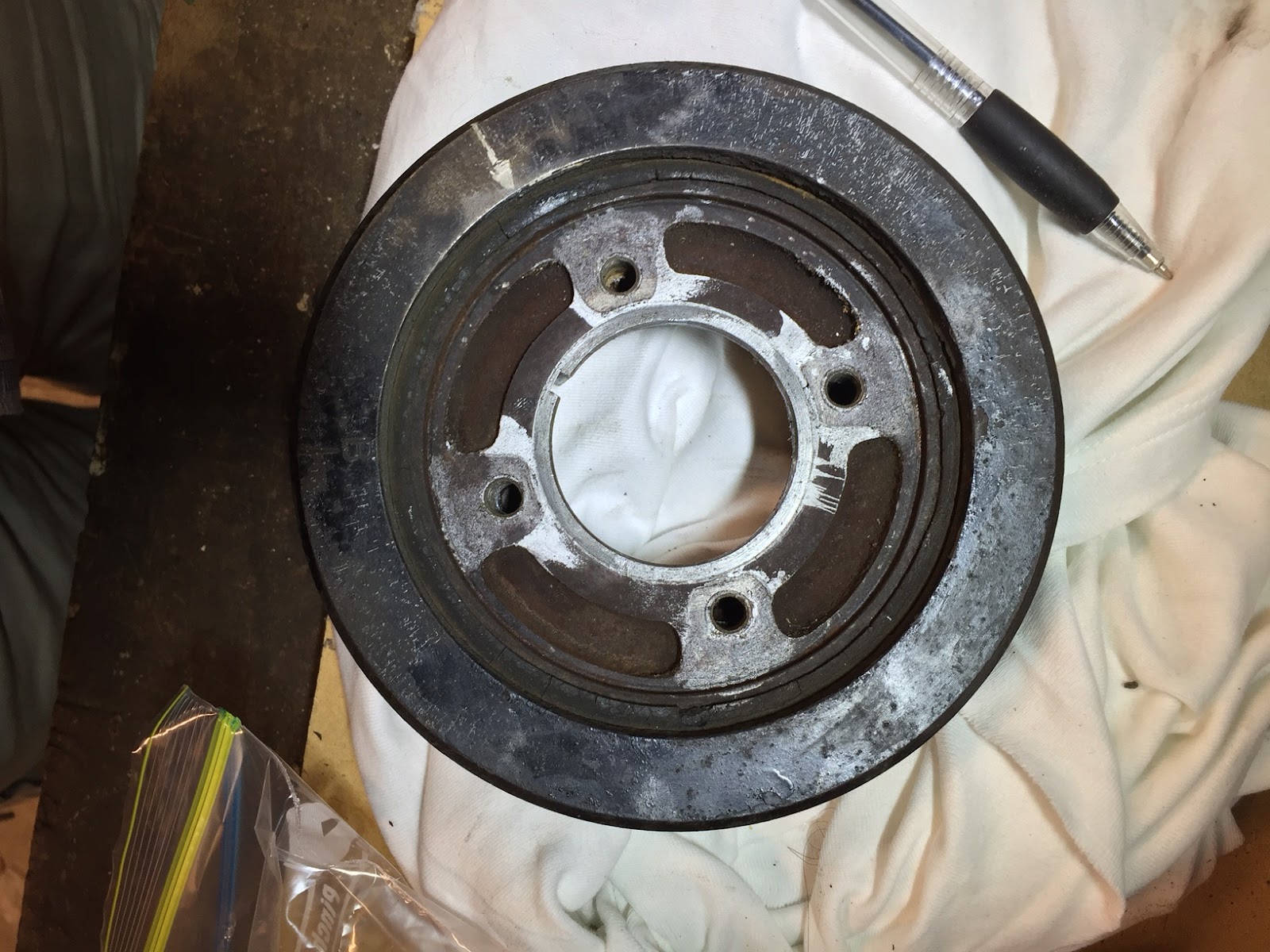
Metalastik Patent Harmonic dampers are in the shape of a dinner plate and are stamped with this name as shown in the image below.
Austin Healey 3000 Metalastik Dampers Before & After
During the 1950s these harmonic dampers were commonly fitted to many British Automobiles. As you can see by the state of the rusty Healey 3000 damper in the image, the rubber in all of these dampers is fading fast and will in most cases be failing to do the job of damping the engine vibrations.
Here is a short list of the makes these dampers were fitted to.
Maserati sports cars from the 50s and 60s had Metalastik dampers fitted
Austin Healey and other Austin Models
Deutz
Big Ford Diesel engines
If you know of other models which use metalastic dampers please leave a note in the comments below. Millions of these dampers were fitted to all kinds of vehicles, many of which we aren't yet aware of. NEW We now offer re-manufacturing to NEW standard of these Metalastik dampers. We offer a 5 year return to our base warranty of our workmanship for ordinary road use. We have to exclude racing from our warranty as many car owners are now using their engines at revs far beyond what they were designed for, and beyond what the Metalastik damper was also designed for. Your old core is required so we can custom clean, straighten and re-manufacture it. You will therefore be giving your original part a new life damping the vibrations of your engine which you may have expensively overhauled.
Contact us damperdude *at* gmail.com to arrange your new Metalastik damper and look forward to smooth running in your automobile.
If you need a Metalastik damper urgently we have in stock Jaguar, Austin Healey and Maserati dampers.
Image from https://www.3dtuning.com/en-US/tuning/austin-healey/3000/convertible.1959
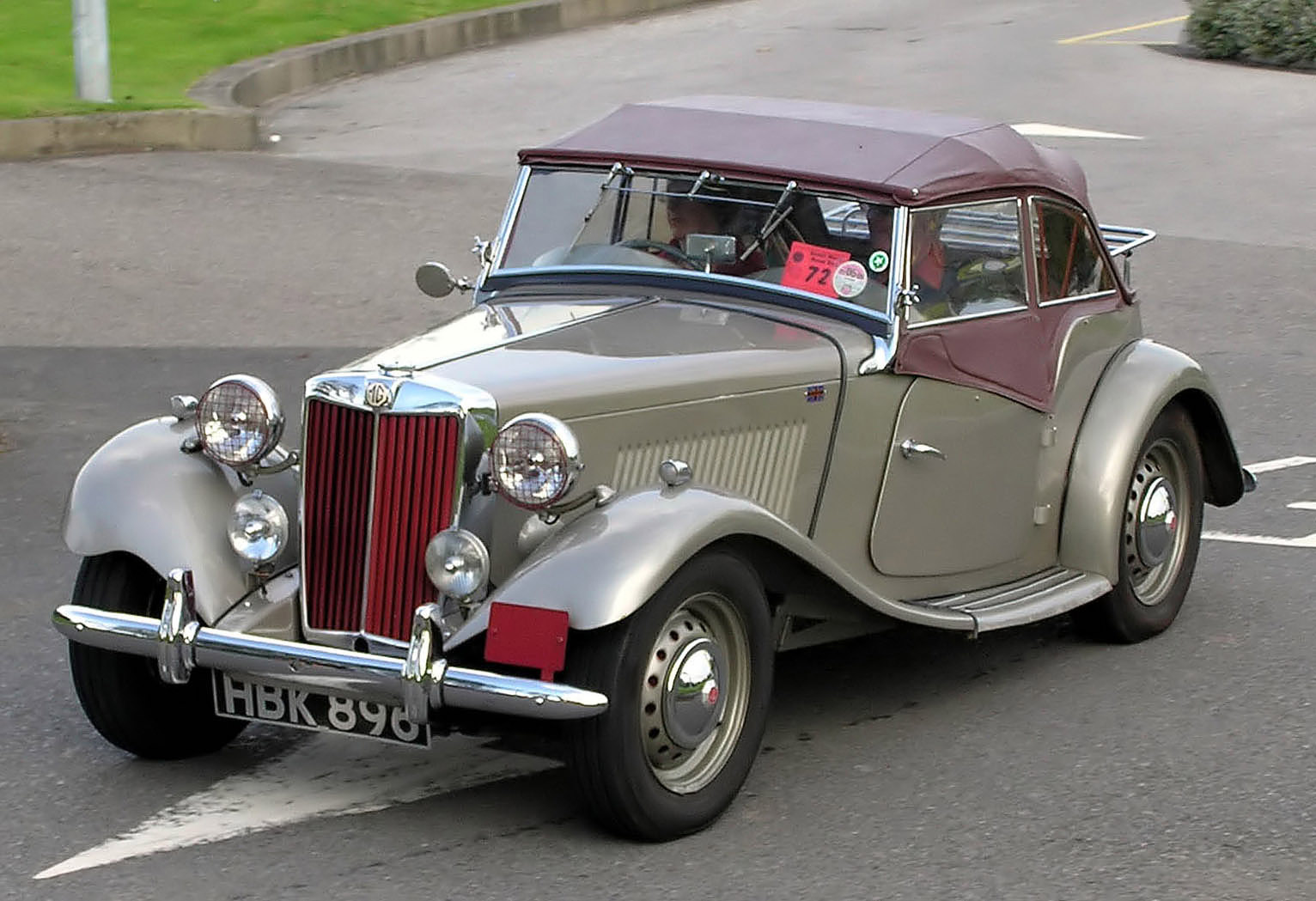
MG 1.5 Litre engines sometimes had a proper crank pulley attached to the front but frequently did not have more than a simple little pulley. That was not a problem when the drivers were simply using the car at the road speeds of the 1950s.
60 years later owners of these machines want to race, hill climb, compete in Targa races and more.
This brings the RPM of the engine up beyond 4000 to 7000 and eventually inevitably results in breakage of gearboxes and crankshafts.
We are working on a prototype damper which we intend to resolve the critical harmonic problems which cause metal fatigue and breakage at the high RPM now required of these engines.
If you own one of these MG engines and are interested in damping it for racing or competition please contact us at damperdude 0@0 gmail.com and express your interest, outline the issues you are facing and we will do our best to assist you.
Custom made harmonic dampers for your classic car motoring needs from the Damperdude.
It's hard to know what the problem is when your engine begins vibrating at odd speeds, or your passengers start being ill, or the windows wind themselves down.
These are all symptoms of the damper being out of whack.
Rubber weakens with age
and also deteriorates due to excessive heat, oil exposure, solvent
exposure, and contraction. So what happens when a harmonic damper is
malfunctioning? What are the symptoms?
Here's a handy list for you to check out.
1. Deterioration of the rubber
between the hub and the outer ring. Shown as cracking, bulging or
shrinking instead of forming a smooth layer level with the metal
components. This will be likely in any crank pulley over 10 years old because of the natural deterioration of the rubber. So old OEM dampers may well not last well or perform their duty even if they have only sat on the shelf for the past 10+ years.
Don't forget rubber is a natural product that simply deteriorates over time.
2. Any wobble of the balancer or wobble in the
drive pulley.
3. Excessive engine vibration.
4. Crankshaft cracking or failure.
5. Squeaking
that does not stop when all other possible sources have been
eliminated.
6. Excessive bearing wear.
7. Excessive gearbox wear or failure.
8. Failure
of other rotating or reciprocating engine elements.
9. Loose
flywheel or pulley bolts.
10. Slipping, slapping or noisy drive
belts. Having to change belts frequently.
11. Loss of
horsepower and lessened fuel efficiency.
12. Highly polished
asymmetrical spons in the pulley grooves, means a warped inertia
ring.
13. Elongation of the balancer key-way or wear on
the balancer hub or crankshaft.
14. Failure in the alternator,
power steering pump, A/C or water pump.
15. Engines that don't
run properly when adjusting the timing.
16. Irregular
idle.
When a damper wears, what happens, at a minimum, is that
the outer ring will move so the timing mark will be in the wrong
position. Or, at worse, the ring comes completely off while you're
driving and becomes the worlds heaviest "Frisbee" under
your hood. Your radiator is one of the favorite items your newly
found toy likes to go through.
Causes of damper failure:- age, cracked hub keyways, incorrect damper for the engine or crankshaft,
damage from improper mounting or removal. Bent or out of balance
drive shafts, buckled or out of balance driving wheels, excessive
heat and age.
If you have a high performance engine without
fitting a correctly calculated high performance damper, a standard
damper could completely self-destruct sending high speed shrapnel
throughout the engine bay with destructive consequences that are not
hard to imagine.
It is important to understand that while an
engine from any manufacturer is designed by a team of qualified
engineers, after market dampers are often designed by people who do
not understand the very important principles of physics that are used
to design harmonic dampers. Great care should be taken in the
selection of any damper to be used as replacement for a stock or for
use in high performance engines.
If a cast iron damper is
replaced with a steel damper care should be taken that the mass of
the steel damper is equal to the mass of the damper being replaced.
Because steel is much lighter than cast iron this means the damper
will be somewhat larger than the one being replaced.
I have
seen after market-dampers that have failed in spectacular fashion
after brief use and have customers who are returning to a stock
damper due to unsatisfactory results with after-market replacements.
As in any field of after market componentry there is a small sector
that know what they are doing and a wide range of pirate
imitators.
ENGINE HARMONY
What's the most misunderstood and ignored engine part under the hood of your of your machine? The harmonic damper or balancer.
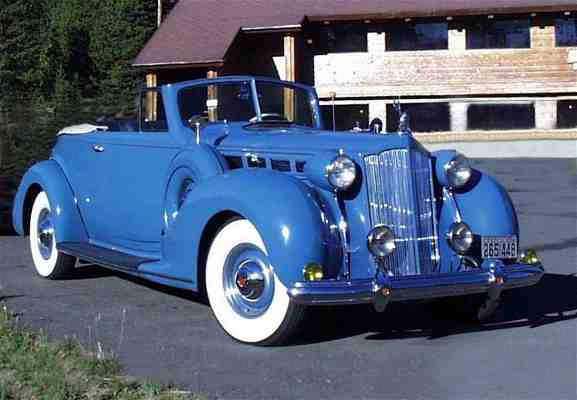
I suspected that the harmonic damper could be the cause of an annoying harshness that was part noise and part vibration and which seemed to be in everything from the ash tray to the tyres in my 38 Packard straight 8.
Problem is you can't call a part defective when you have no idea how it works or what it does. I served my mechanic apprenticeship some years ago at South Auckland Motors (Ford) where this engine part was never mentioned on the floor or in any training material - if it's not giving a problem you don't get told about it.
Having had no luck in trying to find the information I needed within the trade, I then Googled it on the internet and hey presto. If you are looking for something you never expect to find it on your own door step but the solution was!
Harmonic Damper Rebuilds Ltd 07 863 3350 (John Mallett the Damperdude) is in Waihi and he overhauls and services harmonic dampers. After talking to John about my 38 Packard straight 8 damper – all my questions were answered.
John explained the damper's job as follows:
'All objects have a natural frequency that they resonate or vibrate at when struck. An everyday example of this is a tuning fork. The sound that a particular fork makes is directly related to the frequency that it is vibrating at.
Crankshafts twist back and forth a small amount every time a cylinder has a power stroke. This motion is complicated because the amplitude of the vibration varies along the shaft. Eg. the combustion process bending the con rod is one of the complications. The crankshaft will experience torsional vibrations of the greatest amplitude at the point furthest from the flywheel or load.'
These forces are absorbed and neutralized by the damper.
If the damper is seized as it was on my Packard 8 not only was driving it a little unpleasant but I was risking bearing and/or crankshaft failure.
Consider these points:
1) The more con rods an engine has, the more capacity the damper needs to have.
2) If a manual trans is replaced with an auto trans the damper spec could well be different.
3) The length and number of main bearings a crankshaft has determines the dampers capacity.
4) Horizontally opposed 4 cylinder engines although small rely on dampers due to con rod layout and distance between main bearings.
‘By the way the Packard delivered the bride very smoothly!’
Cheers Nigel
Yes we do warranty our work repairing harmonic dampers.
The basics are :- 12 months unlimited kms warranty, return to our base.
Racing, drags, rallying, boy-racing, and other non-standard driving of the engine are expressly excluded.
For those dampers we make supercharger fittings for, or which are expressly for high performance we will cover on a case by case basis if there is defective workmanship and/or materials for our work.
If you only drive your vehicle occasionally we are happy to extend the warranty to 5 years.
If you are re-selling/passing on our work to another person/company we regret that we cannot extend our warranty to cover third parties (or more) without our express permission.
We particularly exclude original equipment manufacture (OEM) faults and materials from this warranty - since the remanufacture of the pulley relies upon re-use and repair of OEM parts.
Damage to the damper before it reaches our workshop is also expressly excluded from this warranty and repair of bent or broken parts will cost extra.
If the fault is not found to be our workmanship after we have repaired it at your request an additional full hourly charge for all time and materials will be made.
Customer Responsibilities are to:-
Remove the damper from the engine in an appropriate manner which does not damage it.
Provide accurate timing marks - email photographs of the timing cover or mark TDC on the damper before sending it to us.
Providing your full contact details and honest details of the use for the damper eg boating, car, racing.
Handling and transporting the damper safely to us.
Re-fitting of the damper upon return in a way which does not damage it.
If you don't know how to do these things please ask us. damperdude (at) gmail.com or call 0064 7 863&3143
In all cases New Zealand consumer law and New Zealand laws apply to all transactions.
There are a number of types of stainless steel oil seal sleeve available to quickly stem oil seal leaks once your damper spigot becomes grooved and worn from an old oil seal running on it for too many miles.
The oil seal surface is grooved on a balancer or harmonic damper most mechanics will apply a cheap stainless steel sleeve and send your damper away with an oversize spigot too large for the oil seal. The stainless steel of the ss sleeve has no lubrication and this causes heat build up and thereby ruins your new oil seal. This is why many engines leak shortly after a stainless sleeve is fitted.
If the keyway is cracked the stainless sleeve will not help hold the cast iron damper together.
The solution? I hand-make 1040 mild steel sleeves for all the balancers I repair.
Your seal surface will be restored to mint condition with a heat-shrunk or press-fitted steel sleeve.
Cracks will not crack further or move as the whole spigot is held firmly intact by the steel sleeve. I make the sleeve surface the correct size to fit your oil seal.
Oil seal surface on the spigot worn and grooved
A custom made steel sleeved spigot ready to fit on the engine.
Contact us damperdude -at- gmail dot com for more information.
Thanks for reading our blog post - is there more you want to know? Leave a query in the comments.
So your pulley, balancer or damper needs repair or modification; a new rubber; needs the timing realigning; must be modified so you can put that awesome supercharger on your engine for terrific performance.
To help us get the remanufacturing work done faster and your damper back to you in a brand new state, there's a few things you can do before you send it.
Clean it - in the wash tank or sand blaster.
Take photographs of the front, back and edge and email them to us.
Wrap it up well and put it in a box to send it to us. Label it as 'Fragile' - cast iron can break like a tea cup if dropped.
Include the position of the timing mark by marking the hub or sending a photo or diagram.
Do include your name, address, contact phone no and the year, make, model and capacity of the engine the damper belongs to.
Email us to let us know the parcel is on it's way.
We will call or email you to let you know it has arrived safely.
We have an eftpos machine and can process your credit or debit card once the damper is repaired to our satisfaction.
The inventor of the harmonic damper was Dr Frank Lanchester. He and two of his eight brothers started the Lanchester Engine Company in 1900. They had high standards for their engines and Dr Lanchester would tinker with each motor that went out the door to make it more perfect than the last one. He invented the Torsional Crankshaft Damper [harmonic damper] and the harmonic balancer to cut vibrations in the Lanchester 38 hp six which was introduced in 1907. In 1910 he invented the single and double counter-rotating balance shafts. The patents for which were purchased in the 1970s and used by Mitsubishi and licensed to other manufacturers to the present day. He also invented the steering wheel, amongst many other things.
Luke Brennan has corrected our account with more recent
information: You may wish to refer to him as Frederick W. Lanchester. Fred, not his brothers Frank or George.
His damper patent was 12th September 1910. He licenced this to Daimler shortly thereafter. Not Frank – Fred.
Also you may also wish to read the superb “Royce and the Vibration Damper” by Tom C. Clarke, which casts strong doubt on the primacy (though not the brilliance) of Lanchester.
It would now appear that Henry Royce had developed a friction-based harmonic damper for his 30HP engines in 1906 but had failed to patent it.
Royce then developed an extremely effective spring-drive/viscous damper that was used on all RR vehicles until the 1950’s.
Thanks Luke, as you can see, the inventors of things can be mis-reported or debated, they are long dead so who knows who really did what and when?
Harmonic dampers are called by a wide range of varied names. In truth they are all torsional vibration dampers. Terms like crank pulleys, balancers, power pulley etc are to varying degrees erroneous. The term harmonic balancer comes from some manufacturers using the hub as a convenient location for external mass balance weights. The reason for this is that it made fine tuning of engine vibration simply done by adding or removing weight from the mass balance. Though it is common belief that large steel parts such as crankshafts are rigid and inflexible this is not true, when a force acts on a crankshaft it bends, flexes and twists just as a rubber band would. While this elastic deformation is often very small it can have a significant impact on how an engine functions. All objects have a natural frequency that they resonate or vibrate at when struck. An everyday example of this is a tuning fork. The sound that a particular fork makes is directly related to the frequency that it is vibrating at. This is it's natural frequency which is dictated by the size, shape and material of the fork. A crankshaft is a series of tuning forks in a line, it has a natural frequency that it vibrates at. When an object like a crankshaft is exposed to a heavily amplified order of it's own natural frequency it will begin to resonate with increasing vigor until it vibrates itself to pieces. This is called fatigue failure. Crankshafts twist back and forth a small amount every time a cylinder has a power stroke. This motion is complicated because the amplitude of the vibration varies along the shaft. The crankshaft will experience torsional vibrations of the greatest amplitude at the point furtherest from the flywheel or load. Engines have major and minor critical rpms and are different due to the fact that some harmonics assist one another producing large vibrations whereas other harmonics cancel each other out. Major critical rpms have harmonics that build on one another to amplify the torsional motion of the crankshaft. Conversely, minor criticals are at rpm that tend to cancel and damp the oscillations of the crankshaft. If the rpm remains at one of the Major criticals for any length of time fatigue failure of the crankshaft will result. These major critical rpms are dangerous and must be avoided or properly damped. The oscillation of an undamped crankshaft at a major critical speed will commonly shear the front crank pulley and/or the flywheel from the crankshaft. I have seen hub keys sheared, flywheels loose, and pressure plates coming apart. These failures have often required crankshaft and or gearbox replacement and in extreme cases the diff. Technically, 'the primary purpose of a harmonic damper is to cancel out third harmonic distortion by using intermodulation between the second harmonic and the fundamental in the space charge regions of the triodes.' Put simply the harmonic damper works by relaying resonance and torsion energy out of the crankshaft and dissipating it as heat by flexing a heavy metal inertia ring which is mounted on a vulcanized rubber cushion. Essentially the damper is a simple spring of rubber plus a vibration and heat absorbing mass - the hub and inertia ring. Harmonic dampers are made of cast iron for the primary reason that cast iron has the ability to absorb and dissipate large amounts of energy because of it's high specific gravity. The damper on each engine is designed for the specific range of vibrations that a particular engine produces. Keeping the damper cool is also of primary importance. The key weakness of the harmonic damper is the rubber. Next blog we will cover signs your harmonic damper or crank balancer is dying or dead - it's serious engine damage ahead if you keep driving it vibrating like that folks.
The Job:- to drive the supercharger faster. To provide more boost pressure to the engine requires a larger diameter pulley than the standard Porsche 944 3 litre four cylinder engine damper.
The solution John found: He machined a new steel belt drive pulley ring for the supercharger which runs over the existing damper on the same belt drive line as the original but on a larger diameter belt drive line.
The damper itself was bonded, re-rubbered and strengthened with a custom made hub turned up from a special grade of aircraft aluminium which was positioned in the centre of the damper hub to provide additional support to the hub because the original is only a thin steel pressing.
As the original inertia ring could not be altered because of its design the new pulley was attached to the hub of the damper via the new aluminium hub. The whole was bolted together, balanced and polished
Today Graeme, the owner of the Porsche 944 called to say that the modification is successful and that he has raced his machine successfully in two races.
This modification is not cheap but it is an effective solution for a racing car with limited space for modifications. If you seek an innovative solution to a supercharger issue like this give Damperdude a call or drop us an email damperdude . at . gmail. com.
Why should I be bothered about it when I am rebuilding my engine?
In the eight years we have been repairing these automotive parts this is our most often heard query, even from experienced mechanics and engine rebuilders.
Harmonic Damper or Torsional Vibration Damper is the correct name for the crankshaft balancer or pulley which is on the front of the crankshaft of your car, bus, truck or boat engine. It absorbs critical vibrations in your engine which would otherwise cause the crankshaft to fail and the vibrations would rapidly wear out other engine and vehicle components.
There are hundreds of harmonic damper designs but the most common design uses a metal hub with a spigot on which the oil seal runs. On the outside of the hub is a layer of rubber and on the outside of that is an inertia ring of metal.
The damper works because usually they are made from cast iron, which of itself absorbs vibrations, the rubber also absorbs vibrations acting as a spring and the inertia ring dissipates harmonic vibrations in kinetic energy and heat.
The design of each damper has been engineered to match the vibrations set up by your engine. This means that just any old damper or balancer won't work on your engine, you must use the one that was manufactured for your engine.
Rubber tends to last only about 10 years, after then it breaks down becoming either shrunken and hard, or soft and gluey. At this point the harmonic damper ceases to do it's work and wear will occur in your engine.
Most engine rebuilders only consider the harmonic damper as the very last item they have rebuilt on an engine; some rebuild the engine and ignore the damper altogether. This is a mistake as if the engine needs rebuilding then likely the damper will need it too.
Rebuilding an engine several times because of damage caused by a malfunctioning harmonic damper can be very expensive.
Our small team are working every day custom remanufacturing to as-new or better standards Harmonic Dampers for dozens of different makes and models.
Contact us
If your engine is vibrating at different speeds
If you are rebuilding your engine
If you are a collector of classic cars and engines
damperdude - at - gmail.com
Our service isn't fast or cheap but it will provide you with many more years of comfortable safe driving in your precious collectible car, truck or boat.
Yes we are based in New Zealand and yes we do trade internationally. We accept credit cards, paypal and payments direct to our bank account.
International Fire Truck before restoration - note rubber distortion
Buick 1950s before restoration
Buick after restoration with custom made rubbers
Cadillac after rebuild with new hand laid rubbers inside